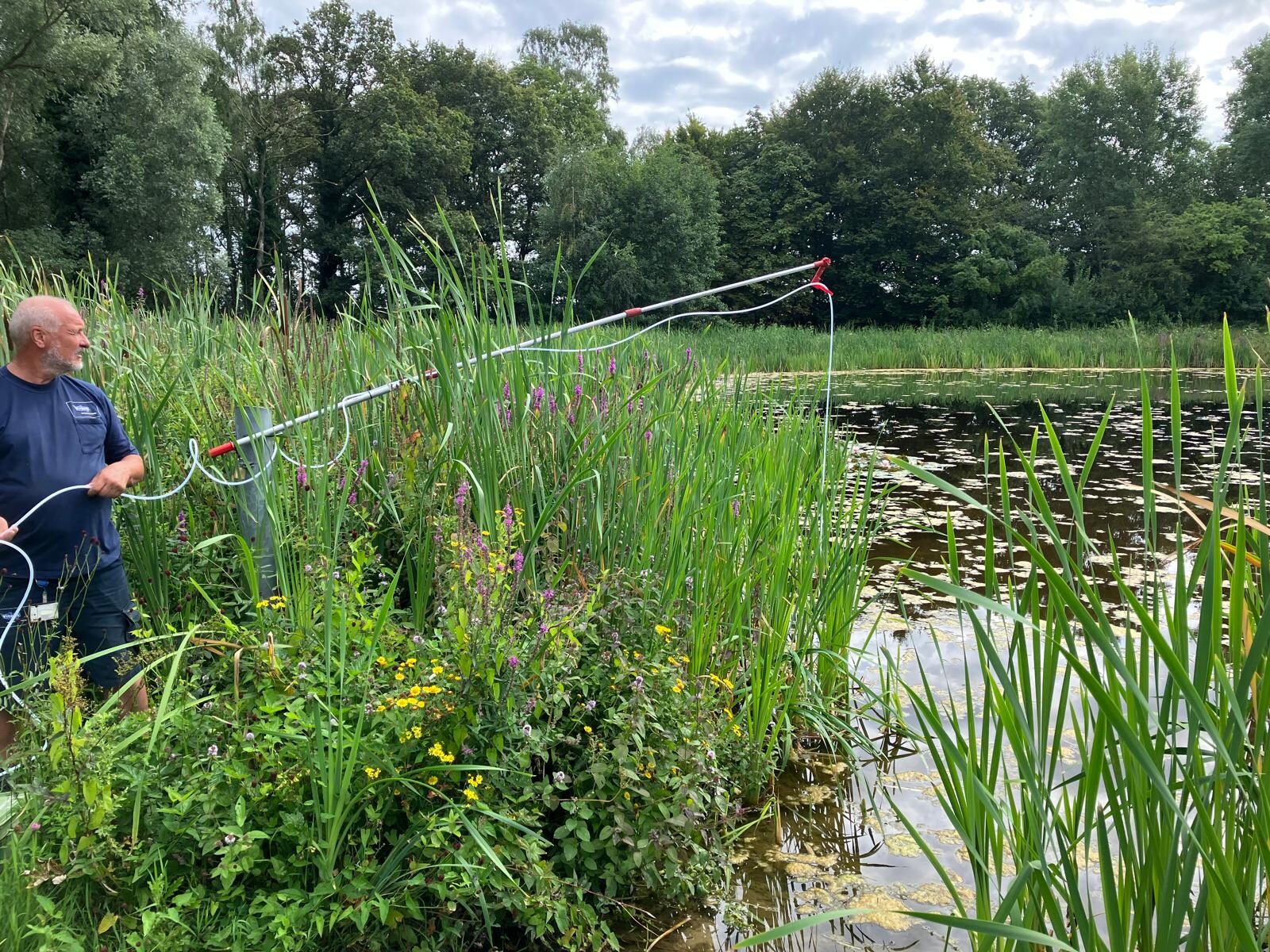
Sampling by Vitens | Photo: Vitens

Sampling by Vitens | Photo: Vitens





Groundwater is generally more stable than surface water and is therefore, where available, Vitens’ preferred source of drinking water. However, groundwater is in short supply, whilst demand for drinking water continues to grow. Groundwater shortages can be mitigated by infiltrating surface water. In this context, it is important to understand how infiltration affects the microbiological composition of the water. At a production site where surface water infiltrates naturally, Vitens and Deltares have studied how the microbiological composition of the water changes during infiltration and how this varies over time. When combined with physical and chemical data, this provides insight into the extent to which fluctuations in surface water quality influence the microbiological composition of groundwater, and which natural processes determine the microbiological differences between surface water and groundwater.
Next-Generation Sequencing
Traditionally, the microbiology of drinking water sources is studied primarily using conventional culture methods. One advantage of these methods is that even very small numbers of bacteria become visible. A drawback, however, is that it is estimated that less than 1% of all bacteria can be cultured in the laboratory [1].
Over the past twenty years, DNA sequencing technology [2] has advanced to the point where it can generate an almost complete picture of the bacterial community. Broadly speaking, there are two methods: amplicon sequencing and shotgun metagenomics. In amplicon sequencing, a single specific gene is amplified using PCR and then sequenced. In shotgun sequencing, all the DNA in a sample is sequenced in small fragments, reconstructed using bioinformatics tools, and assigned to a specific microorganism. Amplicon sequencing is faster and cheaper, but the PCR step can introduce bias.
In this study, amplicon sequencing of the 16S rRNA gene was chosen. This gene encodes a component of the ribosome and is therefore present in all bacteria, making it ideal for obtaining a broad and representative picture of the bacterial composition.
Location and sampling
From June 2023 to December 2023, samples were taken at the Olde Eibergen production site from surface water, shallow groundwater (monitoring well), deep groundwater (extraction well) and pre-filter water, in order to identify the differences between the water types and changes over time.
The bacterial composition was determined for all water types. The pH, temperature and oxygen levels were also measured during sampling for surface water, shallow groundwater and deep groundwater. The concentrations of nitrate, iron, sulphate, methane, ammonium and phosphate were then analysed in the laboratory to determine the redox conditions. Deltares carried out the sequencing, after which the data from the various locations and sampling times were compared. The physical and chemical measurements were then linked to this data in order to explain changes in microbial populations.
Different bacteria in different types of water
The bacterial composition of the different types of water varies considerably (Figure 1). Surface water levels remained relatively stable between August and November. The dominant families were Sporichthyaceae (28-37%), Comamonadaceae (8-24%) and Microbacteriaceae (4-16%). These groups are likely to be involved in the breakdown of organic matter.
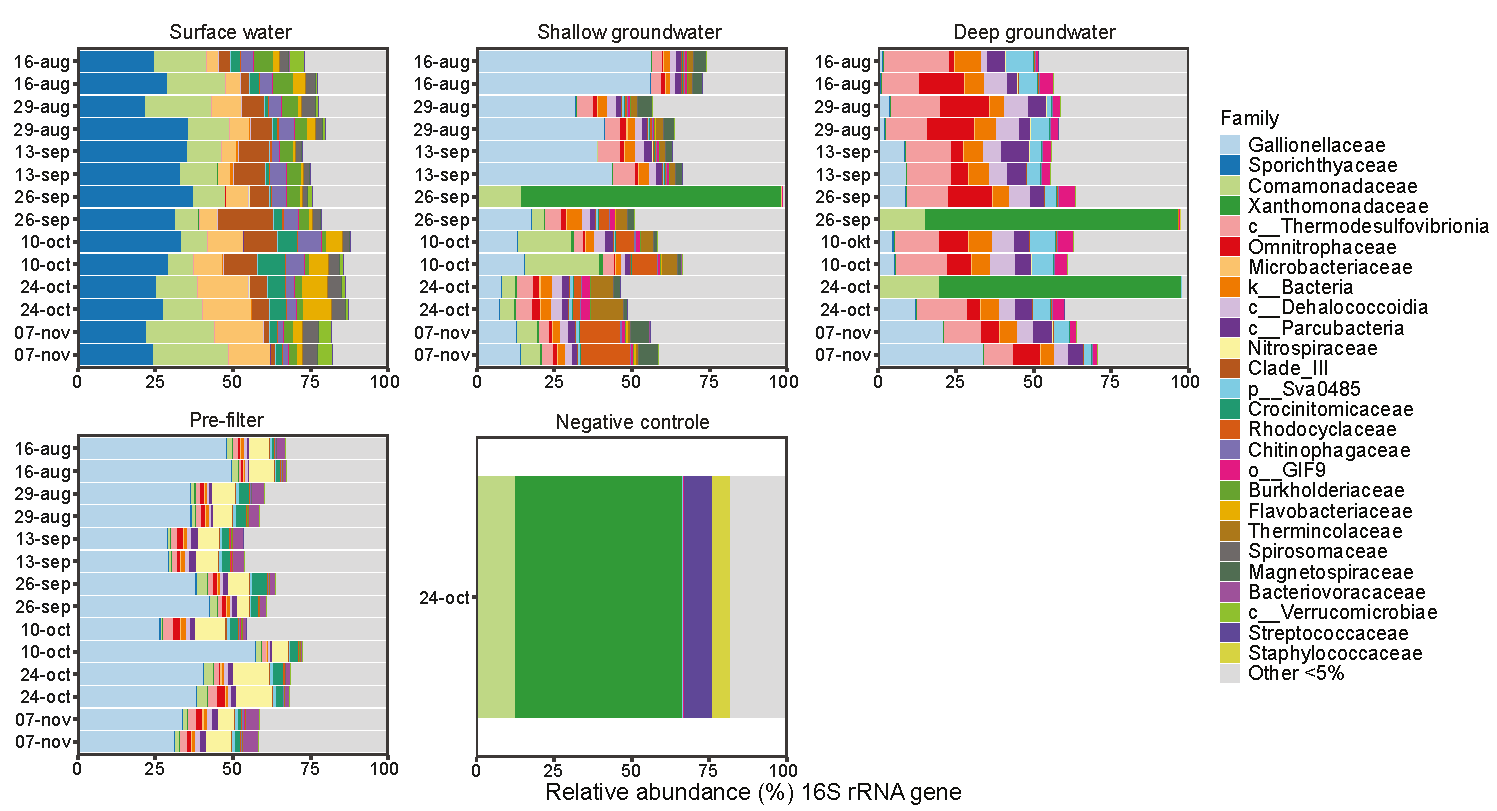 Figure 1. Relative abundance of bacterial families, listed in descending order of abundance. Only those families with a relative abundance of more than 5% in at least 1% of the samples are shown. Not all groups could be identified at the family level. Higher taxonomic levels are indicated by a letter (k_: kingdom, p_: phylum, o: order, c_: class)
Greater variation was visible in the shallow groundwater (monitoring well). This was mainly due to fluctuations in the iron-oxidising Gallionellaceae, from 56% in August to just 7% in October. In addition, Thermodesulfovibrionia (3-7%) were the second most abundant in August and September. From October onwards, the Comamonadaceae (4-24%) took over this role.
The deep groundwater (extraction well) remained relatively stable, although the proportion of Gallionellaceae gradually increased from September onwards. As in the monitoring well, Thermodesulfovibrionia were also common here (10-21%).
Three samples showed an abnormal profile, identical to that of the negative control, and have therefore been excluded from the analysis.
The bacterial community in the water from the pre-filter was dominated by Gallionellaceae (26-57%) and Nitrospiraceae (4-12%). This is consistent with the findings that biological iron removal and ammonium removal take place in the rapid sand filter. The family Gallionellaceae includes iron-oxidising bacteria, whilst the family Nitrospiraceae includes nitrifying bacteria.
The influence of abiotic properties
The bacterial communities in the different water types vary significantly. In some cases, these differences can be directly linked to physical and chemical conditions. For example, the Thermodesulfovibrionia group consists of bacteria that reduce sulphur in environments with low oxygen and nitrate concentrations and high ammonium levels. They are indeed found in large numbers in the monitoring well and the extraction pit, where there are low oxygen and nitrate levels and higher ammonium levels (data not shown). Correlations can also be established for other groups of bacteria, but by no means for all of them.
However, it is possible to examine, at the population rather than the species level, which abiotic factors are associated with changes in microbial composition. This can be seen in Figure 2, where the many variables describing the populations have been reduced to two dimensions. Greater distances between points indicate greater differences in composition. Abiotic factors are represented by arrows, with the direction of the arrow indicating the populations with which they correlate, and the length of the arrow indicating the strength of the correlation.
This analysis shows that bacterial populations in surface water correlate with pH, oxygen, nitrate and temperature. The higher oxygen content in surface water is consistent with the presence of bacteria that thrive in oxygen-rich conditions. The correlation with temperature can be explained by the fact that surface water is more strongly affected by seasonal temperature fluctuations than groundwater. Bacteria respond to this because they have an optimal temperature for growth and activity. A similar explanation applies to pH, as surface water has a higher and more variable pH than groundwater.
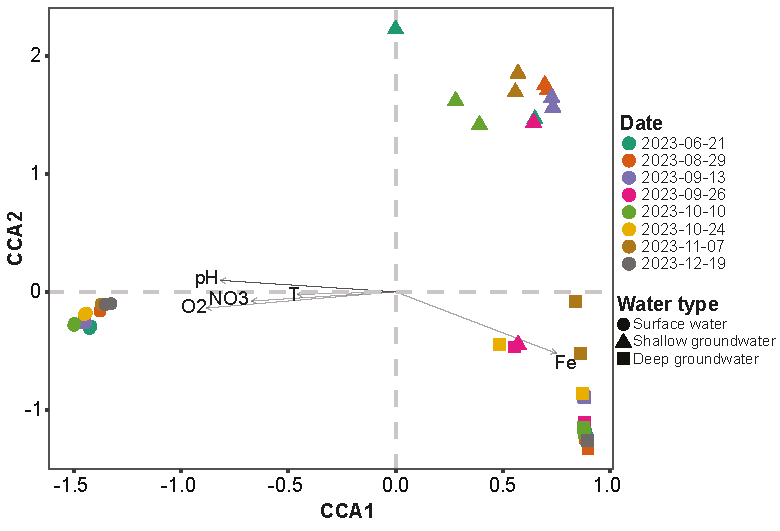
Figure 2. Correlation between abiotic factors and microbial composition
The bacterial populations in the water from the extraction well correlate strongly with the iron content. This is because, in the oxygen-poor environment of groundwater, iron(III) is reduced to iron(II) and dissolves in the water. However, the relative number of iron-oxidising bacteria is lower in the extraction well than in the monitoring well. The correlation with iron(II) is therefore not due to iron-oxidising bacteria, but to the lack of oxygen, which affects both the dissolution of iron and the bacterial composition.
Differences in abiotic conditions therefore determine which bacteria can survive in different types of water, whilst bacteria, in turn, also influence these conditions. The underlying physical and chemical differences are primarily determined by the decomposition of organic matter and the use of successive electron acceptors. First, oxygen is consumed, as evidenced by the measured decrease in oxygen levels from surface water to the monitoring well and the extraction well (data not shown). This is followed by nitrate uptake, which leads to lower nitrate concentrations in the groundwater. At the same time, ammonium levels rise, in line with the development of reducing conditions. Iron, phosphate and methane levels also rise under these conditions.
The bacterial composition of surface water does not, therefore, directly determine that of groundwater. Instead, it is determined by which bacteria are able to survive under changing abiotic conditions caused by shifts in redox conditions.
Next-generation sequencing of pathogenic bacteria
The microbiological safety of water is determined not by its overall bacterial composition, but by the presence of specific pathogenic microorganisms. Unfortunately, the sequencing data does not provide any direct insight into the reduction in pathogenic microorganisms during passage through the soil. Potential pathogens were found only in very small numbers, and reliable identification requires a higher level of taxonomic resolution than the family level, preferably down to at least the species level. This proved impossible using the method employed.
In principle, reliable identification is possible using DNA sequencing, for example via shotgun metagenome sequencing, but this method is considerably more expensive and also poor at detecting bacteria that occur in very small numbers. One possible alternative is to use common, non-pathogenic surface water bacteria as a proxy for the reduction in pathogens. The actual presence of pathogenic microorganisms can then be confirmed using techniques capable of detecting very small numbers.
Further research is needed to determine whether such common bacteria do indeed serve as a reliable indicator of the reduction in pathogens, and whether this approach can also be used for other groups of microorganisms, such as viruses and protozoa.
Conclusions and recommendations
The different water types at Olde Eibergen differ markedly in their bacterial composition. When water passes through the soil, the microbial community in the surface water does not affect that in the groundwater. Changes in redox conditions resulting from the breakdown of organic matter appear to be decisive, and only those bacteria capable of surviving in these changing conditions are able to establish themselves and grow in the groundwater.
This provides valuable insight into how passage through the soil determines the bacterial composition of groundwater. This knowledge is becoming increasingly important in a warming climate, where surface water will be needed more often as a supplementary source of drinking water.
Furthermore, 16S rRNA gene amplicon sequencing has been found to be unsuitable for the reliable detection of pathogens during the infiltration process. However, common surface water bacteria could be used as a proxy for the reduction in pathogens during soil passage. Research is needed to determine whether this approach is robust and suitable, including for other microorganisms.
The study investigated how the microbiology of infiltrating surface water changes as it passes through the soil, and what factors drive this change. The bacterial communities were found to vary significantly between the different water types. It was not the microbiology of the surface water, but variations in redox conditions resulting from the breakdown of organic matter that proved to be the determining factor for the microbial composition of the groundwater. Only bacteria that can survive under changing abiotic conditions continue to grow into the groundwater. The method of 16S rRNA gene amplicon sequencing was found to be unsuitable for detecting pathogens, but common surface water bacteria may potentially serve as a proxy.