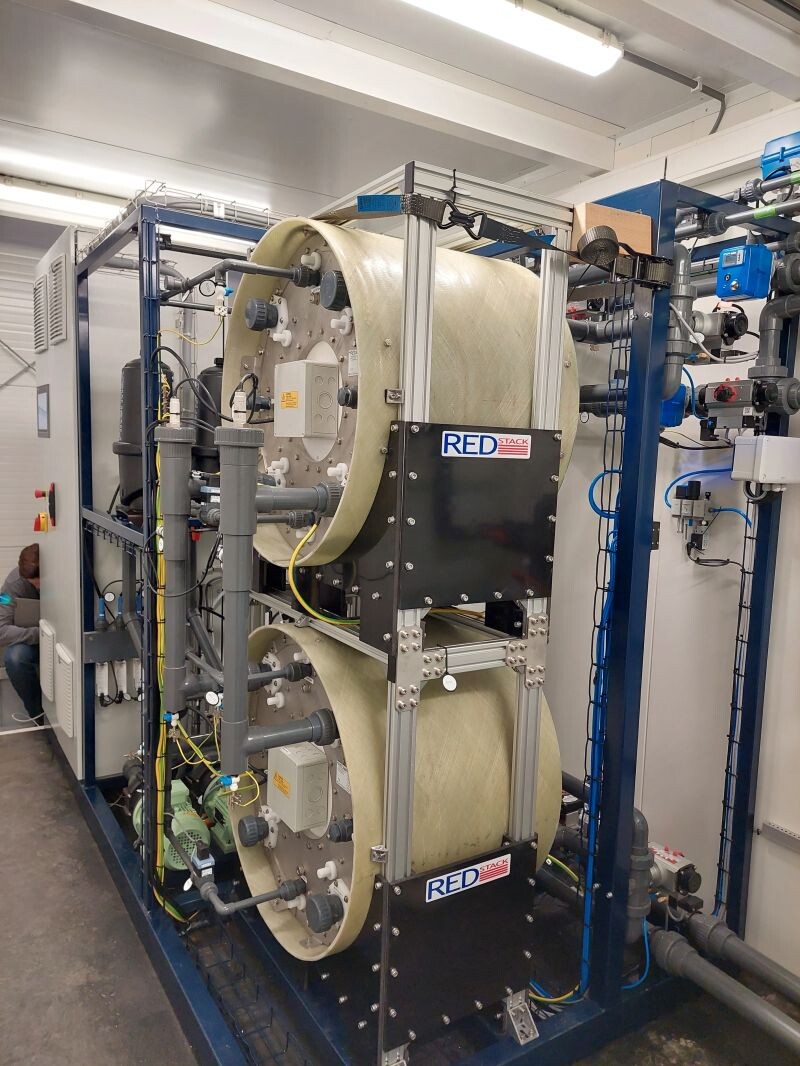
Photo: REDstack

Photo: REDstack



In the Westland region, drainage water and residual water flows from greenhouse horticulture areas are collected at various locations via a Central Drainage Water Discharge System. This makes it possible to treat the water collectively. One such collective treatment plant is De Vlot in ‘s-Gravenzande, a partnership of around 65 greenhouse nurseries, which together account for 160-170 hectares of greenhouse horticulture. At the outset, it was expected that the treatment plant would process between 300,000 and 500,000 cubic metres of drainage water/residual water every year[1].
The problem with this waste water is that it contains fertilisers such as nitrogen and phosphate and also, depending on the crop, residues of plant protection products. Discharging this water untreated puts pressure on local water quality; direct discharge is therefore not permitted. Several treatment projects have been launched in recent years in order to comply with the EU Water Framework Directive (WFD).
De Vlot currently discharges its effluent into the sewer system. The aim is to treat the effluent to such a high standard that it can be discharged directly or used for irrigation [1].
The current treatment plant at De Vlot treats the influent in sequence using a mechanical screen, ferric chloride dosing combined with sedimentation, slow sand filtration and activated carbon. This removes more than half of the phosphates and sulphate as well as organic matter, including residues of plant protection products. An additional step is required, particularly for nitrate (NO3-) but also for some other ions. A pilot study was carried out to look at whether ‘electrodialysis reversal’ is a viable option for this. In this study, the effluent could be treated directly using EDR without any additional pre-treatment. The key question, therefore, was whether EDR would be capable of removing nitrate selectively, relative to the other ions present.
In addition to nitrate, other forms of nitrogen were also examined. Analyses showed that the drainage water contained very little organic nitrogen and ammonium (NH4+), with NH4+ remaining below the detection limit (0.1 mmol/L). The target for total nitrogen in the WFD programme for 2022-2027 at the discharge point (Westland storage basin) is less than 2.00 mg of total nitrogen per litre (summer average). This means that the nitrate concentration in the effluent must be reduced by more than 95 percent, to a maximum of 8.9 milligrams of nitrate per litre.
Pilot
The pilot project was set up to test EDR in practice as a supplementary water treatment process, following on from the existing treatment process. The advantage of EDR is that its modular nature makes it possible to scale up to full-scale operation in one go if the project proves successful.
During the pilot in the autumn of 2025, the feed water for the EDR plant had a nitrate concentration of 180-280 mg/L. The plant consisted of a two-stage EDR system with a capacity of 10 cubic metres per hour, built by the Pure Water Group (Sprundel) inside a shipping container.
Electrodialysis is an electrically driven membrane process that removes cations and anions (salts) from water. In an electrodialysis stack, liquid compartments are formed between alternating layers of cation exchange and anion exchange membranes. Applying an electric potential across this stack ‘draws’ the ions through the respective membrane from one liquid compartment and then concentrates them in the adjacent liquid compartment. Contamination of the membranes is prevented by regularly reversing the polarity of the electrical potential (‘reversal’).
A portion of the ions present in the feed is removed at each EDR stage, resulting in a purified fraction and a concentrate. The more steps involved, the purer the purified fraction becomes. The two-stage design of the pilot project (two stacks) made it possible to analyse the purified fraction and the concentrate both at the halfway stage and at the end, and to adjust the process accordingly.
During the pilot, the plant was set to achieve a total salt removal rate (desalination) of approximately 75 percent. Samples were taken three times a week from (i) the influent, (ii) the intermediate product and the concentrate after the first stage, and (iii) the final product and the final concentrate. These samples were analysed on a weekly basis.
Once a month, a more extensive series of measurements was carried out, during which the system was set to five different desalination levels. At each desalination level, samples were taken of the influent, the purified fraction after the first stage and after the second stage. This made it possible to identify the relationship between total salt removal and the removal of each individual ion [2].
In the pilot, 80 percent of the feed water was available as purified process water. The removed ions ended up in the concentrate (the remaining 20 percent).
Although there is still a ‘contaminated’ flow that needs to be discharged, this shift from discharge into the sewer system to surface water offers a crucial advantage. The current approach of discharging the entire volume into the sewage system places a heavy strain on the system. Diverting most of this flow to surface water frees up sewage capacity for purposes such as housing development. In addition, discharging this purified, fresh water into the local storage basin helps to ensure water availability during dry periods.
Nitrate effectively removed
The system removed up to 97 percent of the nitrate present from the effluent, with a water recovery rate of 80 percent and a total salt removal rate of 75 percent. As a result, the concentration of the process water was 8.9 mg/L NO3- or lower, thereby fully complying with the discharge standards for surface water (Delfland WFD Programme 2022-2027).
It is striking how quickly the nitrate removal takes place. Even after the first EDR stage, with a total desalination rate of just 55 percent, 80 percent of the nitrate has already been removed. Chloride is also removed quickly.
This preferential removal of nitrate and chloride over sulphate (see Figure 1) is likely due to the combination of the mobility and spatial properties of these ions. NO3- and Cl- have a similar ionic radius and a lower hydration number than sulphate. This means that sulphate encounters greater resistance when passing through the membranes, resulting in slower removal. With a total desalination rate of 75 percent, sulphate removal therefore amounts to only around 20 percent. Only when nitrate and chloride have been almost completely removed does the transport of sulphate through the membranes increase [2].
A similar pattern can be seen with the cations. Sodium and potassium are removed efficiently compared to calcium and magnesium. The practical advantage of this is that the concentrate produced does not become as hard, thereby limiting the formation of deposits on the membranes.
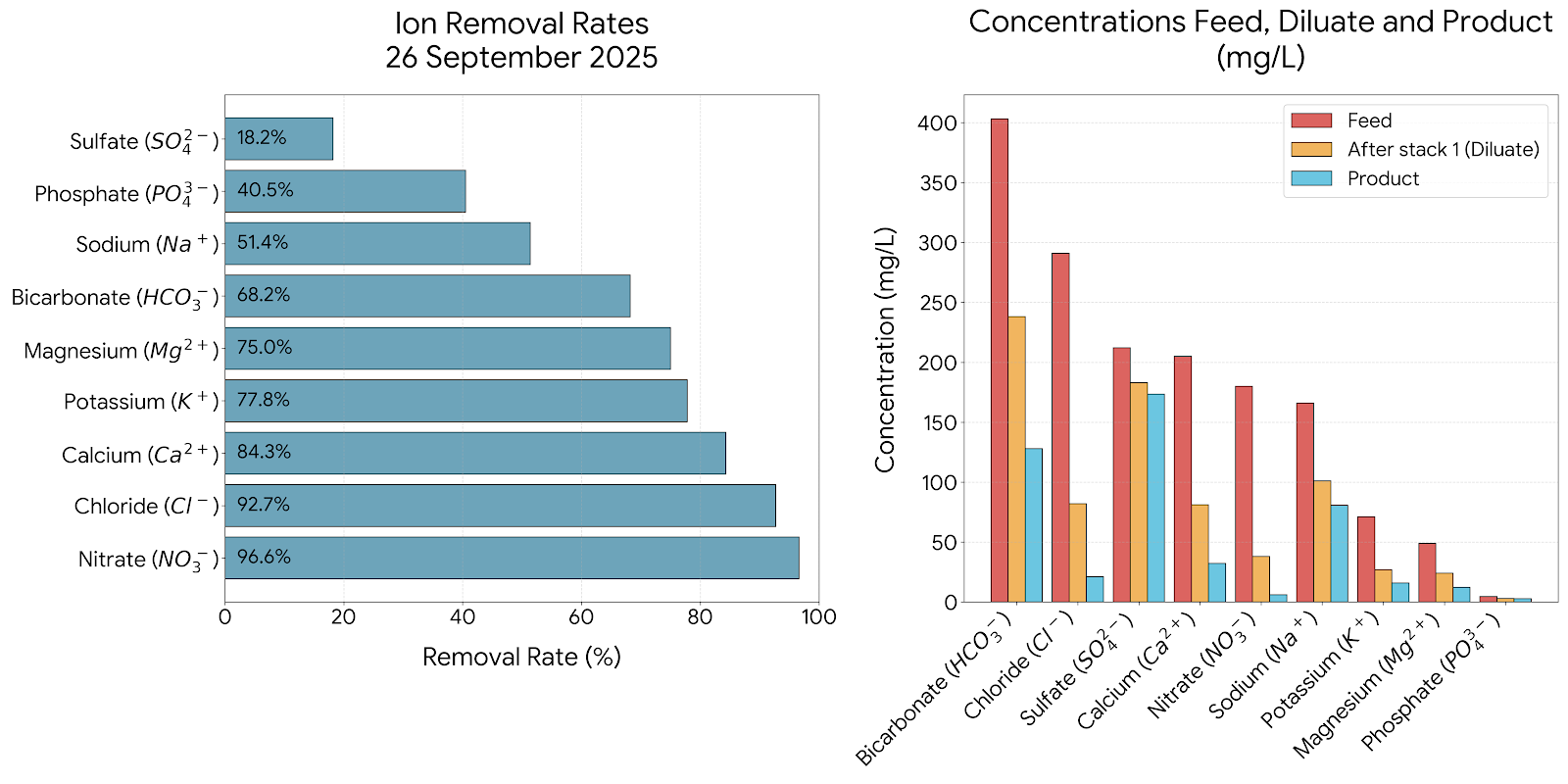
Figure 1. Removal efficiency per ion at a total desalination rate of 75 percent and a water recovery rate of 80 percent.
Selectivity is key
The selectivity of the EDR system is not just an interesting feature: it is key to the technical advantage offered by this system. As nitrate is removed preferentially, it is not necessary to remove the entire inorganic load in order to comply with the nitrate standard. The 75 percent EDR desalination rate comfortably meets the nitrate target, resulting in savings in terms of both energy consumption and the size of the plant.
The composition of the concentrate, which includes nitrate and potassium, offers opportunities for useful application and for further research into nitrogen recovery. This is consistent with the aim of making the best possible use of waste streams.
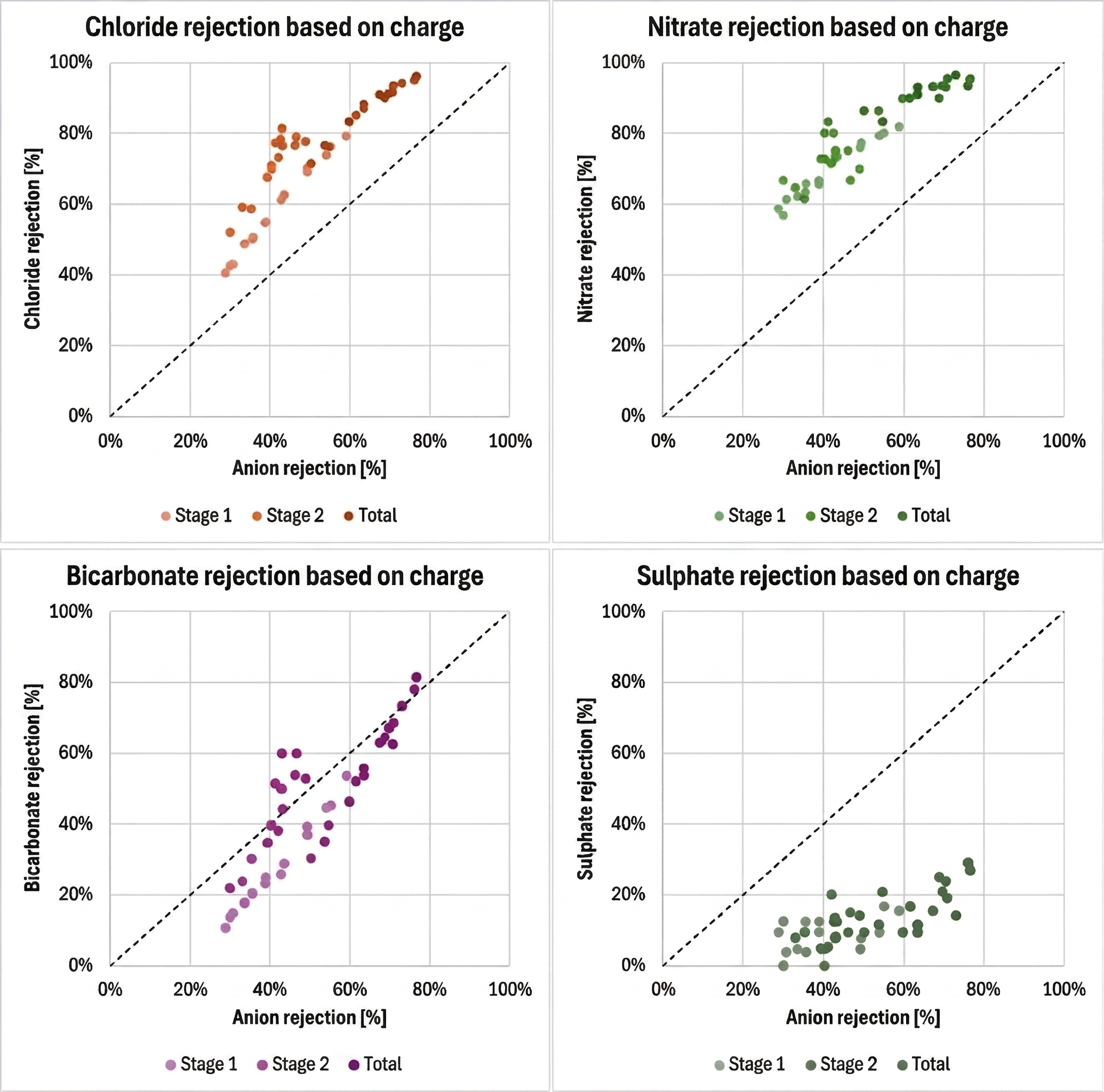
Figure 2. Retention of chloride (top left), nitrate (top right), bicarbonate (bottom left) and sulphate (bottom right), plotted against the retention of the total anion charge (dotted line). Sampling in autumn 2025. The dotted line indicates the point at which the anion in question would be removed to the same extent as the total anion charge.
Practical implications
The pilot project at De Vlot demonstrates that EDR is an effective addition to collective wastewater treatment plants. Direct discharge into surface water will become feasible, which will significantly reduce the burden on sewage treatment plants and increase the availability of fresh water in the storage basin during dry periods.
The operating costs of the EDR stage are estimated at approximately €0.15 per cubic metre of treated water. This figure includes both the electricity consumption of approximately 0.6 kWh and the amount of chemicals required to prevent deposits in the concentrate. Although these variable costs are favourable compared to sewerage charges, capital charges and maintenance costs must also be considered to obtain a complete financial picture.
The concentrate remains a key focus. Although more than three quarters of the volume of residual water is available as purified water, the remaining concentrated residual flow must be processed within the existing legal and logistical frameworks.
A higher recovery rate is technically possible but increases the risk of deposits in the concentrate [3]. In addition, whilst this does reduce the volume to be discharged, the load to be discharged remains the same. For sustainable practical application, it must become feasible to recover useful raw materials from the concentrate in the longer term. A more concentrated residual flow offers more possibilities in this regard.
Collective treatment plants for the horticultural sector, such as De Vlot (‘s-Gravenzande, the Netherlands), treat wastewater from greenhouse horticulture areas, with a particular focus on removing residues of plant protection products. Discharge into surface water and/or reuse as irrigation water often requires an additional step that also selectively reduces the concentration of dissolved nutrients. REDstack carried out a pilot project at De Vlot involving an electrodialysis reversal (EDR) system. In autumn 2025, EDR removed virtually all nitrate (97 percent) with a water recovery rate of 80 percent and a total desalination rate of 75 percent, thereby enabling discharge into surface water. EDR removes nitrate and chloride before sulphate, and sodium and potassium before calcium and magnesium.